

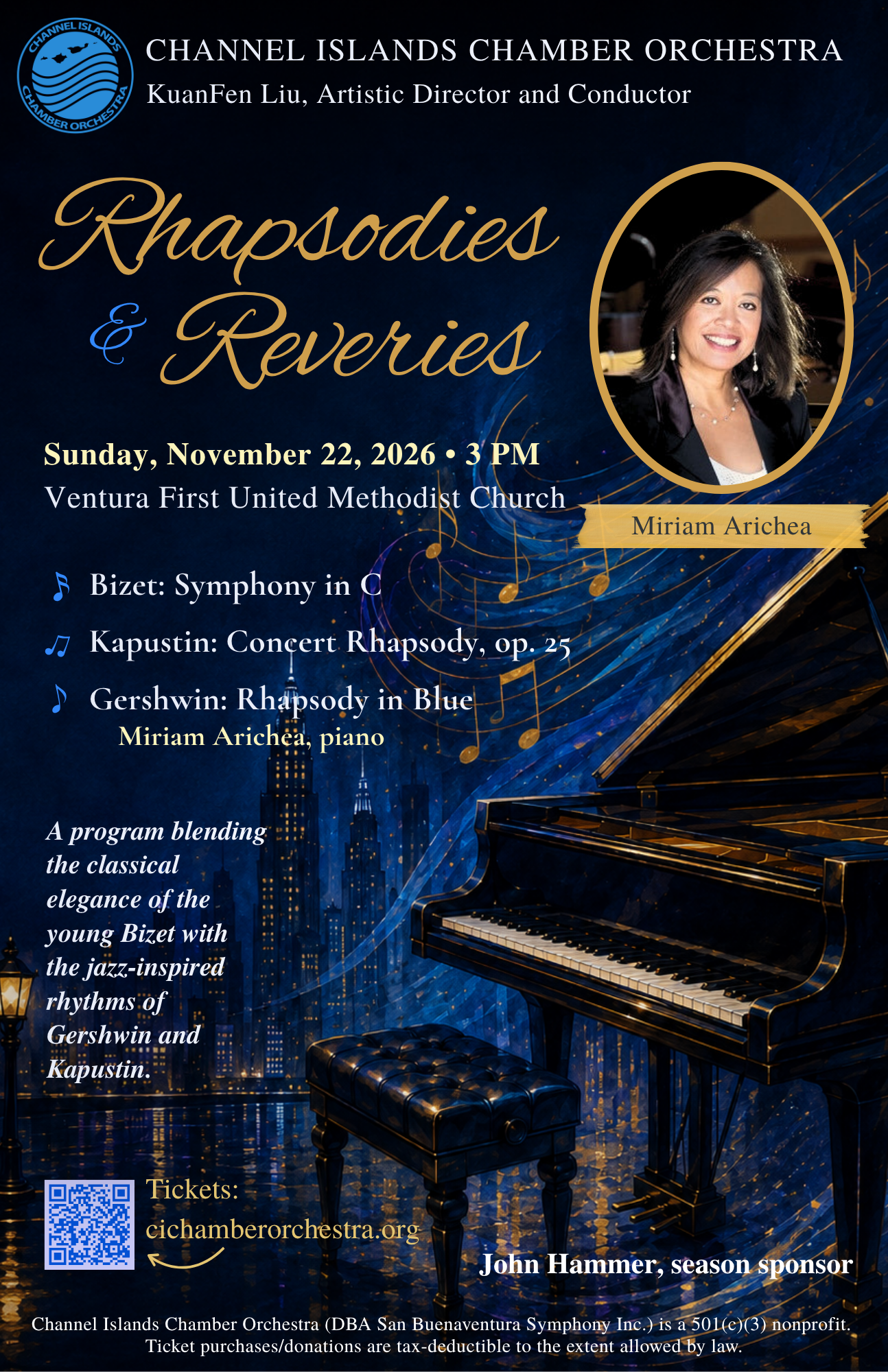
Rhapsodies & Reveries
November 22, 2026, 3 PM
Ventura First United Methodist Church
$30.00
Kids and students always free!
Dive into a world where classical elegance meets jazz flair, with performances that promise to enchant and electrify.
Experience a captivating blend of classical and jazz music, featuring works by Bizet, Kapustin, and Gershwin.
Performed by the Channel Islands Chamber Orchestra, with our renowned pianist, Miriam Arichea, as featured soloist.
Hosted in the historic Ventura First United Methodist Church, offering an exquisite auditory experience.
Immerse yourself in an unforgettable musical journey that will leave you inspired and rejuvenated. Perfect for both avid classical music lovers and those new to the genre.
Now Offering a Season Ticket option!
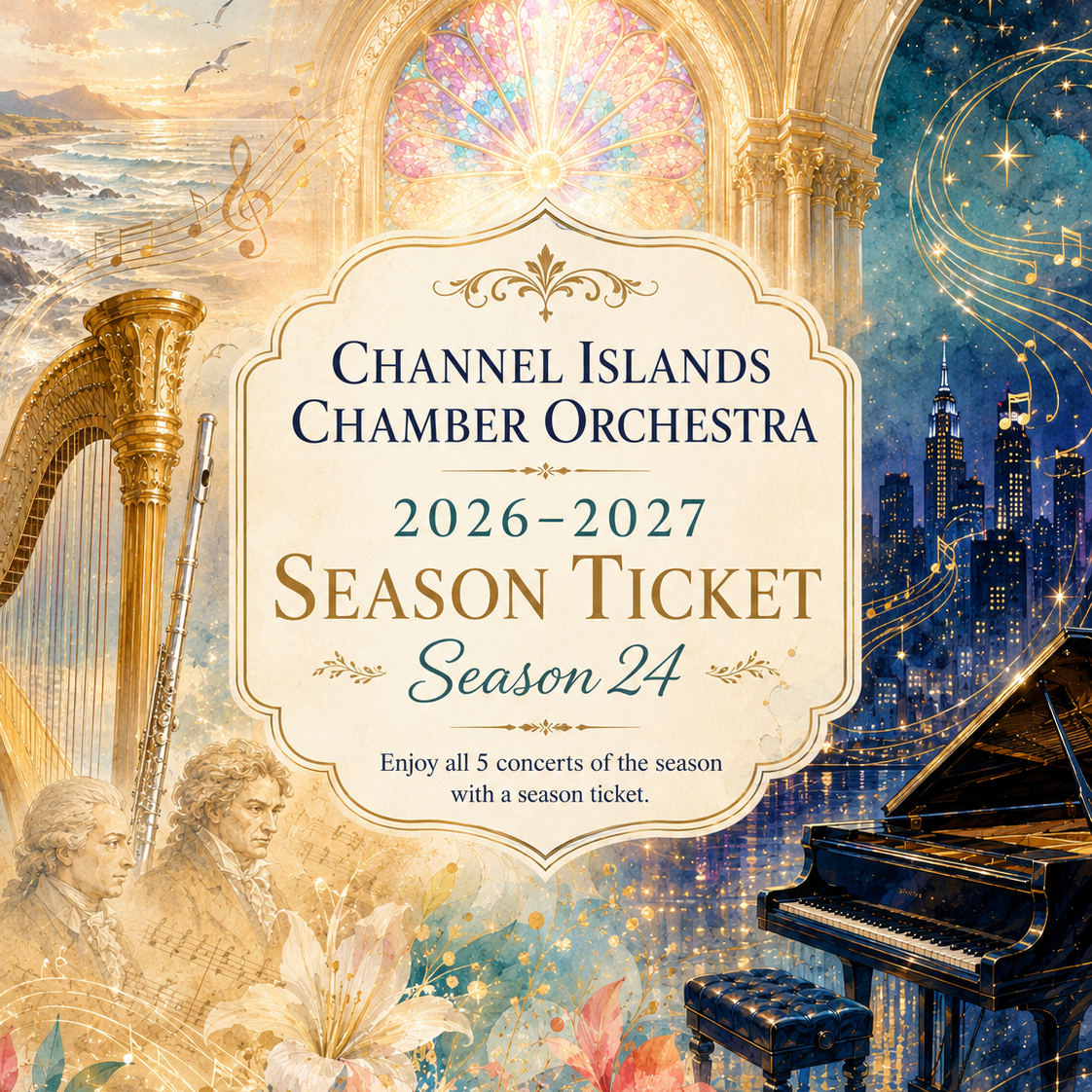
View Season Brochure below



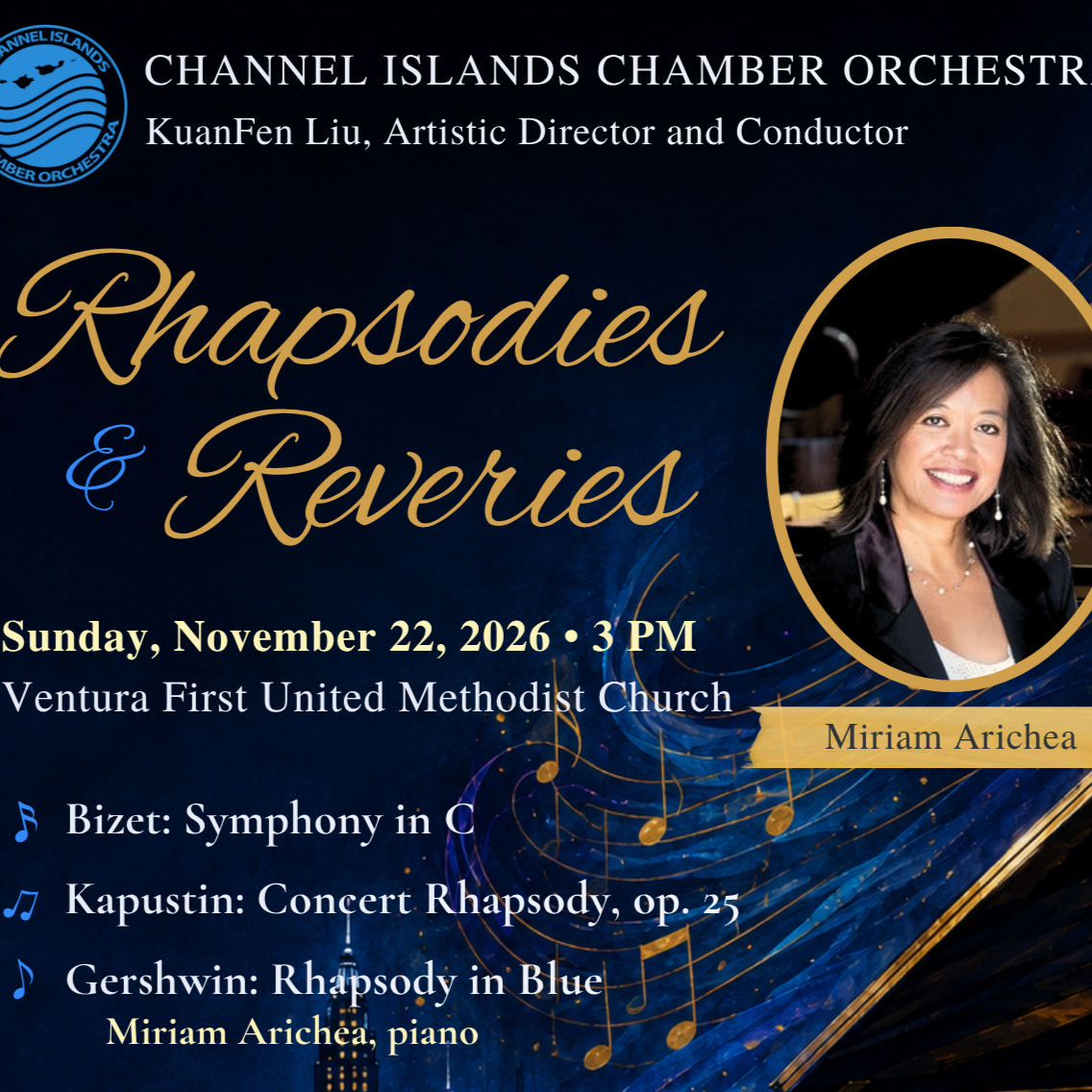
Dive into a world where classical elegance meets jazz flair, with performances that promise to enchant and electrify.
Experience a captivating blend of classical and jazz music, featuring works by Bizet, Kapustin, and Gershwin.
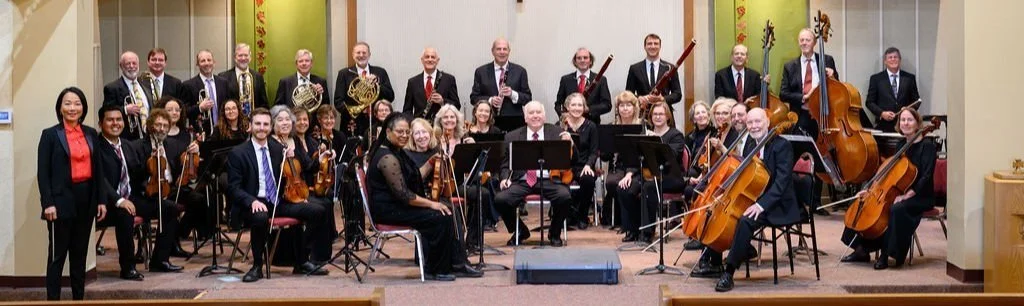
Performed by the Channel Islands Chamber Orchestra, with the renowned pianist as a featured soloist.
Hosted at the historic Ventura First United Methodist Church, offering an exquisite auditory experience.
Immerse yourself in an unforgettable musical journey that will leave you inspired and rejuvenated. Perfect for both avid classical music lovers and those new to the genre.
Coming Up
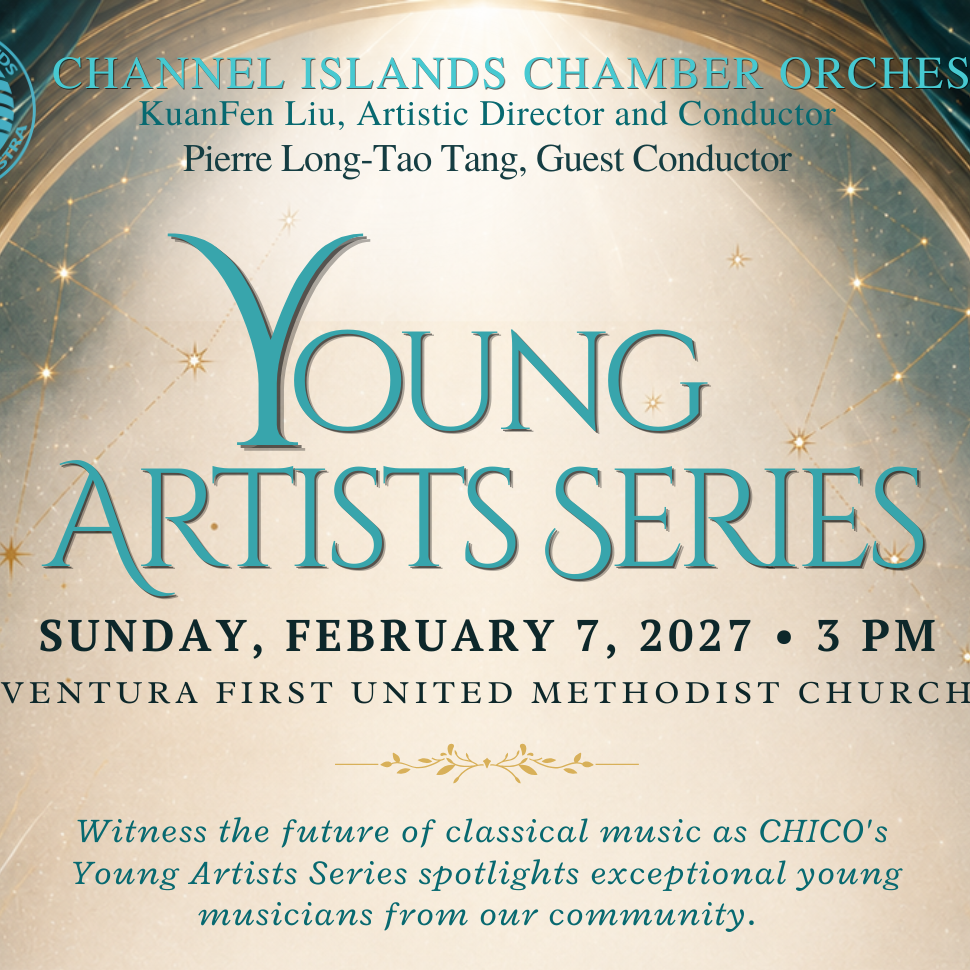
SUNDAY, FEBRUARY 7, 2027 • 3 PM
VENTURA FIRST UNITED METHODIST CHURCH
Witness the future of classical music as CHICO's Young Artists Series spotlights exceptional young musicians from our community.
FEATURED YOUNG ARTISTS
Andrew Huang, clarinet
Kayla Kwon, flute
Alex Janura, piano
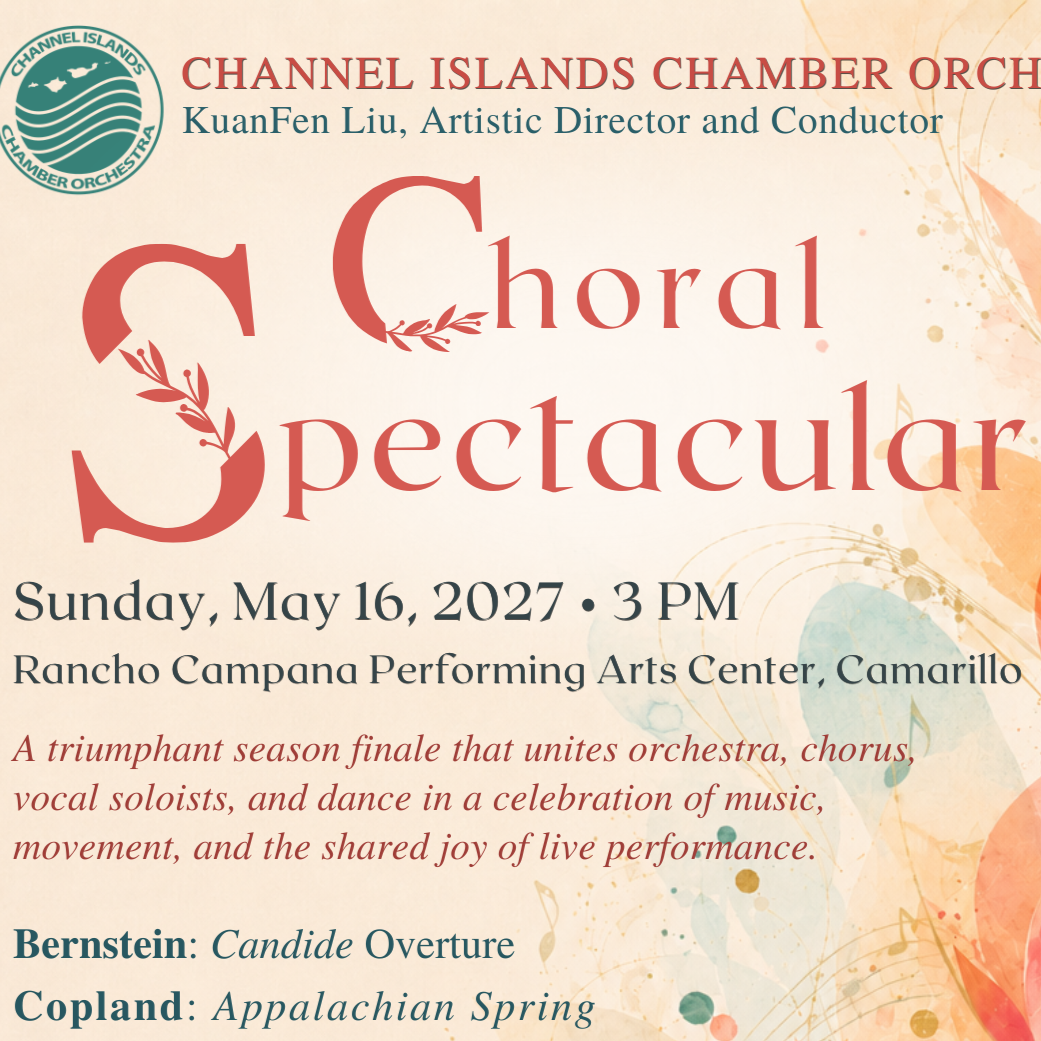
Choral Spectacular
Sunday, May 16, 2027 • 3 PM
Rancho Campana Performing Arts Center, Camarillo
A triumphant season finale that unites orchestra, chorus, vocal soloists, and dance in a celebration of music, movement, and the shared joy of live performance.
Bernstein: Candide Overture
Copland: Appalachian Spring
Corigliano: Fern Hill
Copland: "The Promise of Living" - from The Tender Land
Bernstein: "Make Our Garden Grow" - from Candide
Featuring:
Meagan Martin, mezzo-soprano
Choreography by Abdiel Jacobsen
& Ephrat Asherie
CSUCI Dance Studies
CSUCI University Chorus
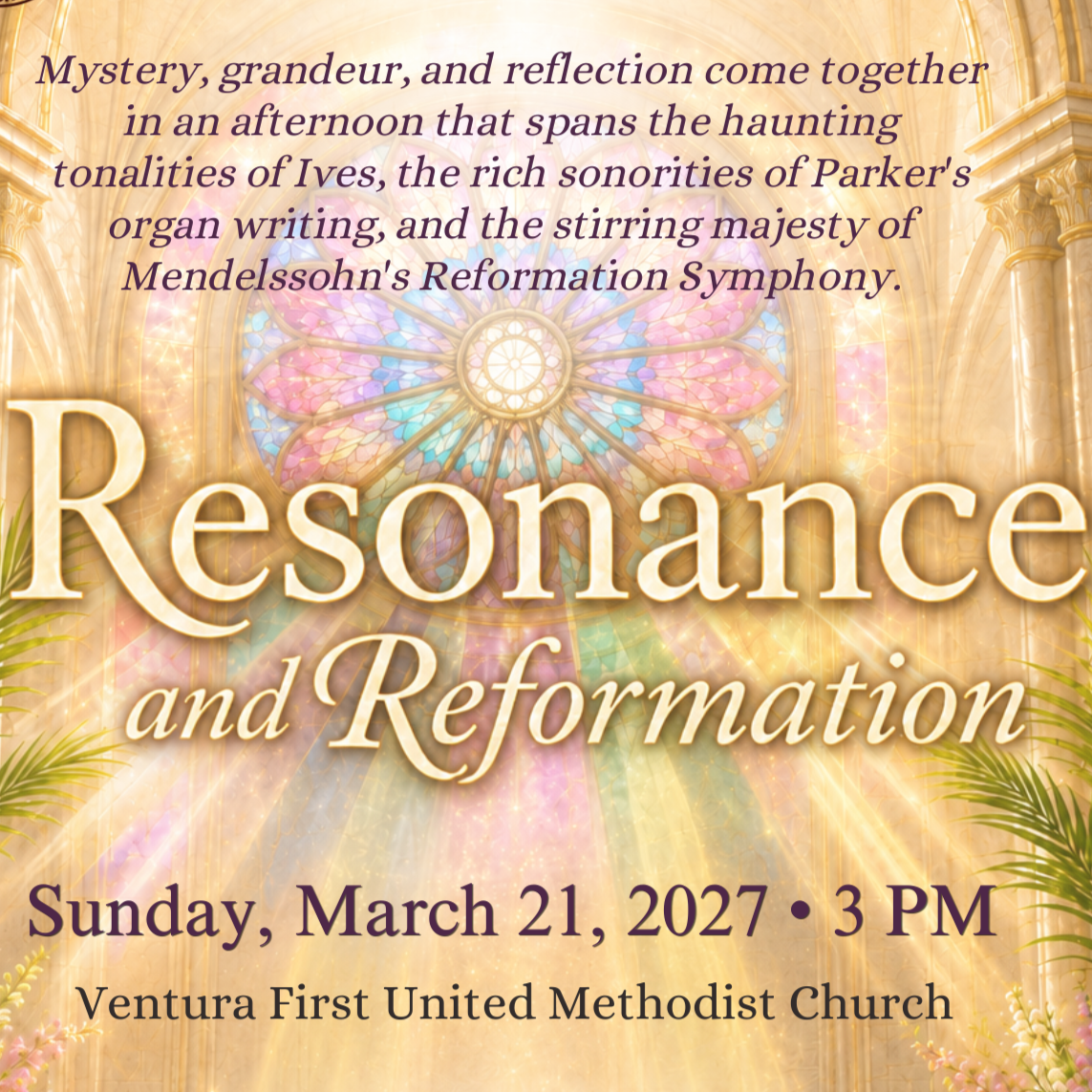
Sunday, March 21, 2027 • 3 PM
Ventura First United Methodist Church
Mystery, grandeur, and reflection come together in an afternoon that spans the haunting tonalities of Ives, the rich sonorities of Parker's organ writing, and the stirring majesty of Mendelssohn's Reformation Symphony.
Ives: The Unanswered Question
Parker: Organ Concerto, op. 55 - Daniel Newman-Lessler, organ
Mendelssohn: Reformation Symphony, op. 107